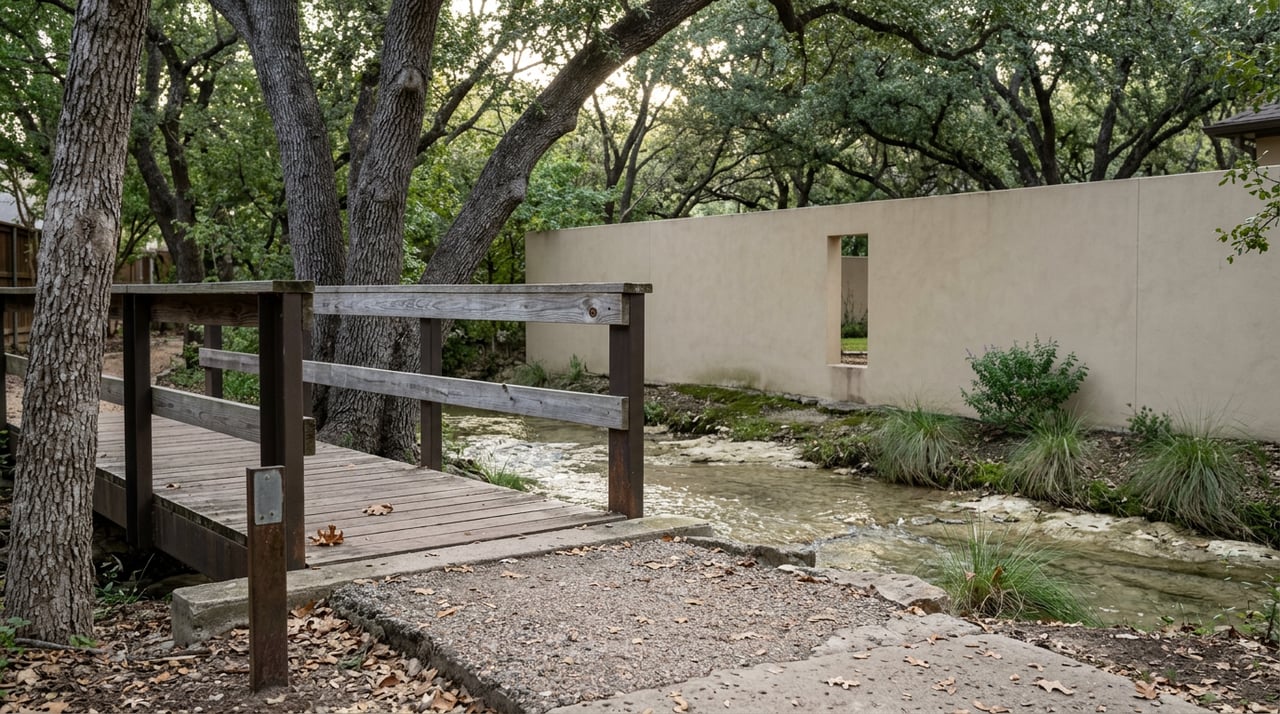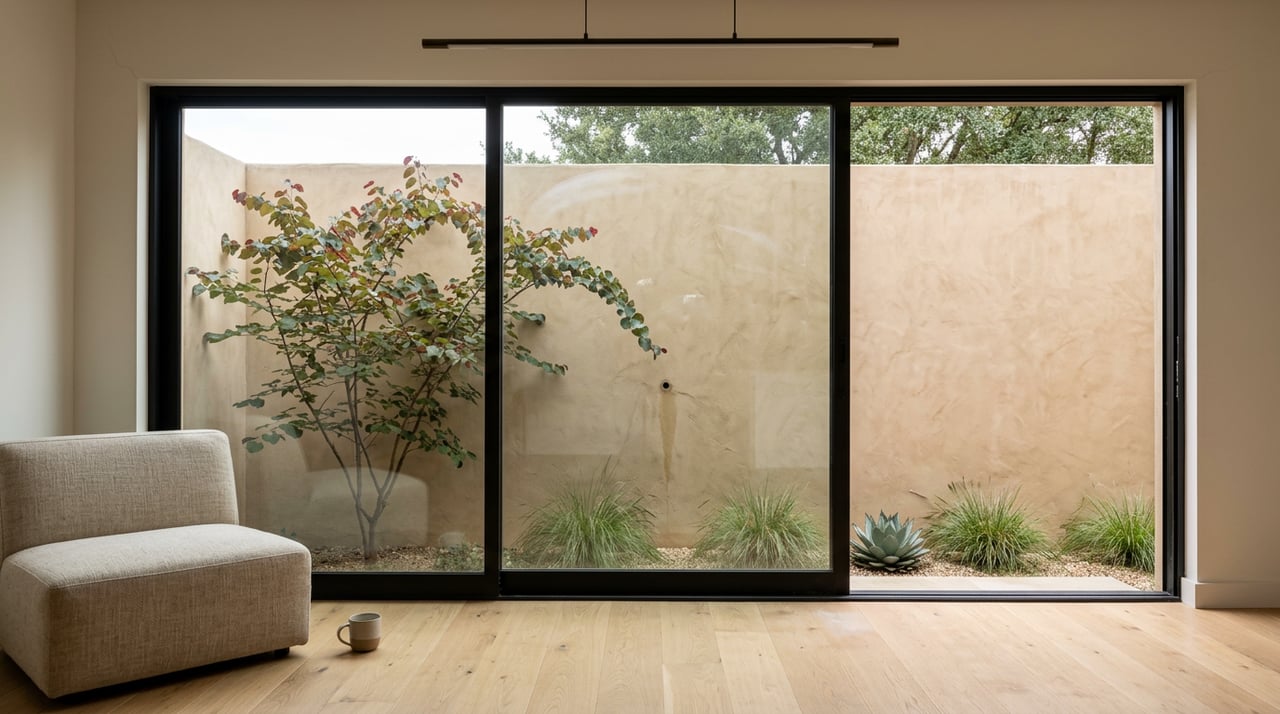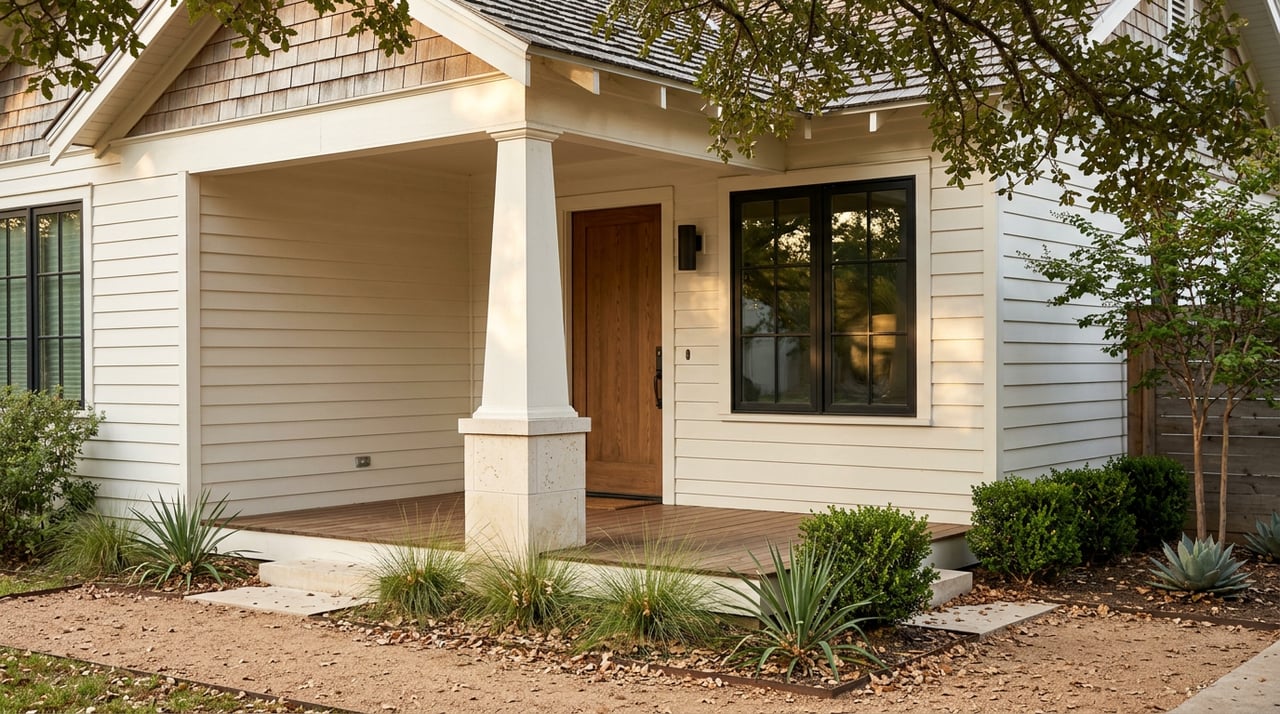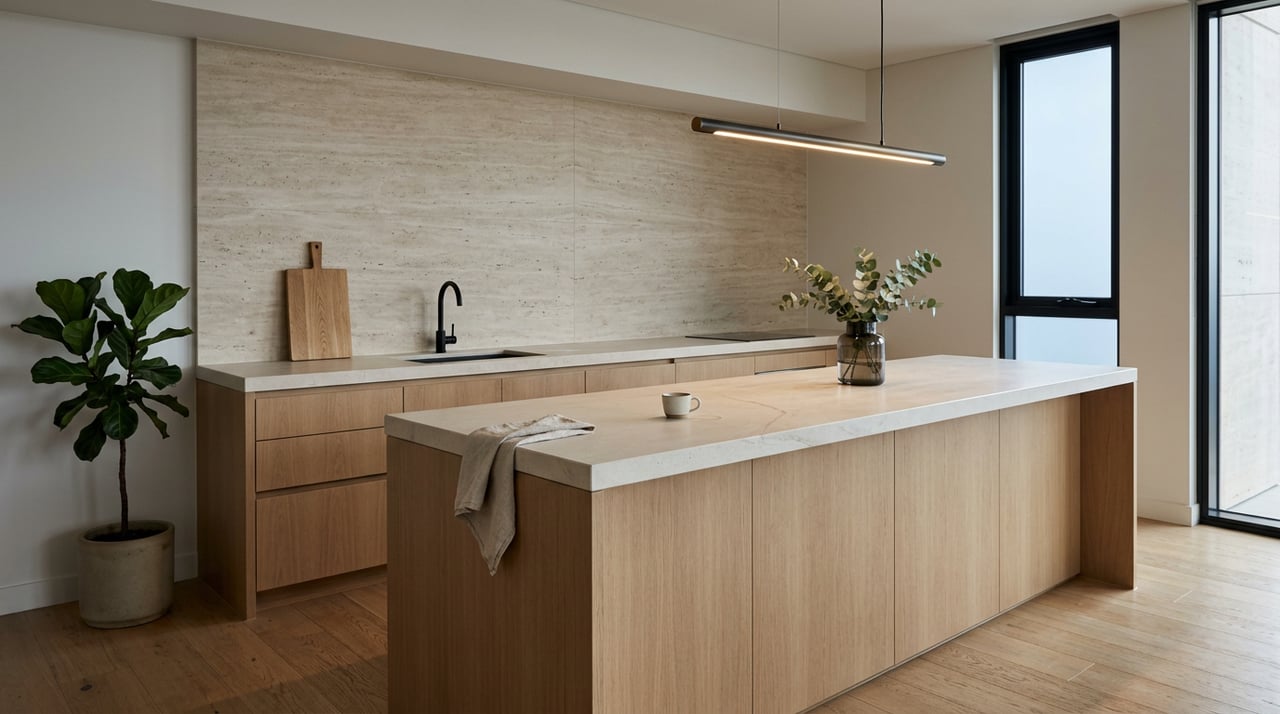
Deep Eddy stands out in Austin’s residential landscape due to a rare spatial condition where a steady neighborhood atmosphere exists alongside immediate access to central city activity. Instead of functioning as either a dense urban core or a detached residential zone, it operates in a transitional position shaped by movement efficiency, land composition, and surrounding infrastructure.
This creates a living environment where daily routines feel steady and connected to the city without being dominated by its intensity.
How does neighborhood structure shape everyday movement in Deep Eddy?
The layout of Deep Eddy is defined by residential streets that connect efficiently to major city routes while avoiding heavy internal congestion. This allows residents to move in and out of the neighborhood with minimal friction while preserving a quieter internal street environment.
This type of accessibility and ease of movement is also reflected in Most Walkable Neighborhoods in Austin, Texas, where walkability, short travel distances, and integrated street design contribute to how residents experience daily convenience and neighborhood livability.
Zillow research shows that centrally located residential zones with balanced access and limited internal disruption tend to develop stable long-term living patterns due to efficient connectivity.
How does mobility design influence residential perception in this area?
In Deep Eddy, separation from the city is defined less by distance and more by how transportation flow interacts with entry points and surrounding corridors. The neighborhood connects quickly to downtown Austin but is not structured as a major pass-through route.
This evolving relationship between convenience and digital decision-making is also evident in How Technology is Changing the Homebuying Process in Travis Heights, TX, where buyers increasingly use online tools, mapping systems, and data-driven platforms to evaluate access, commute efficiency, and neighborhood experience before physically visiting areas like Deep Eddy.
Financial Times coverage of urban design trends highlights that residential areas positioned along efficient transit pathways but outside major congestion channels tend to maintain stronger residential consistency over time.
Why does Deep Eddy maintain a steady residential environment?
The area’s residential consistency is reinforced by its limited internal commercial density and established housing structure. Without large-scale redevelopment zones or heavy retail corridors inside the neighborhood, external activity remains controlled and predictable.
The Wall Street Journal notes that residential areas with stable internal composition and limited commercial expansion tend to maintain more predictable long-term living patterns.
This contributes to a consistent environment that does not shift rapidly with external development cycles.
What does this reveal about Deep Eddy’s position within Austin?
Deep Eddy functions as a transitional residential layer between central Austin and surrounding established neighborhoods. It is shaped less by extremes and more by balance, efficient connectivity paired with reduced internal disruption.
This positioning allows it to serve residents who prioritize both accessibility and a stable residential setting within the same geographic area, without requiring trade-offs between the two.
FAQs
Why does Deep Eddy feel both connected and quiet?
Because it sits near major city routes while maintaining low internal traffic activity.
Is Deep Eddy considered urban or residential?
It blends both characteristics without fully aligning with either category.
What shapes its daily living environment?
Street layout, traffic flow patterns, and limited internal commercial zones.
Why do residents stay in Deep Eddy long-term?
Because it offers consistent living conditions with strong city access.