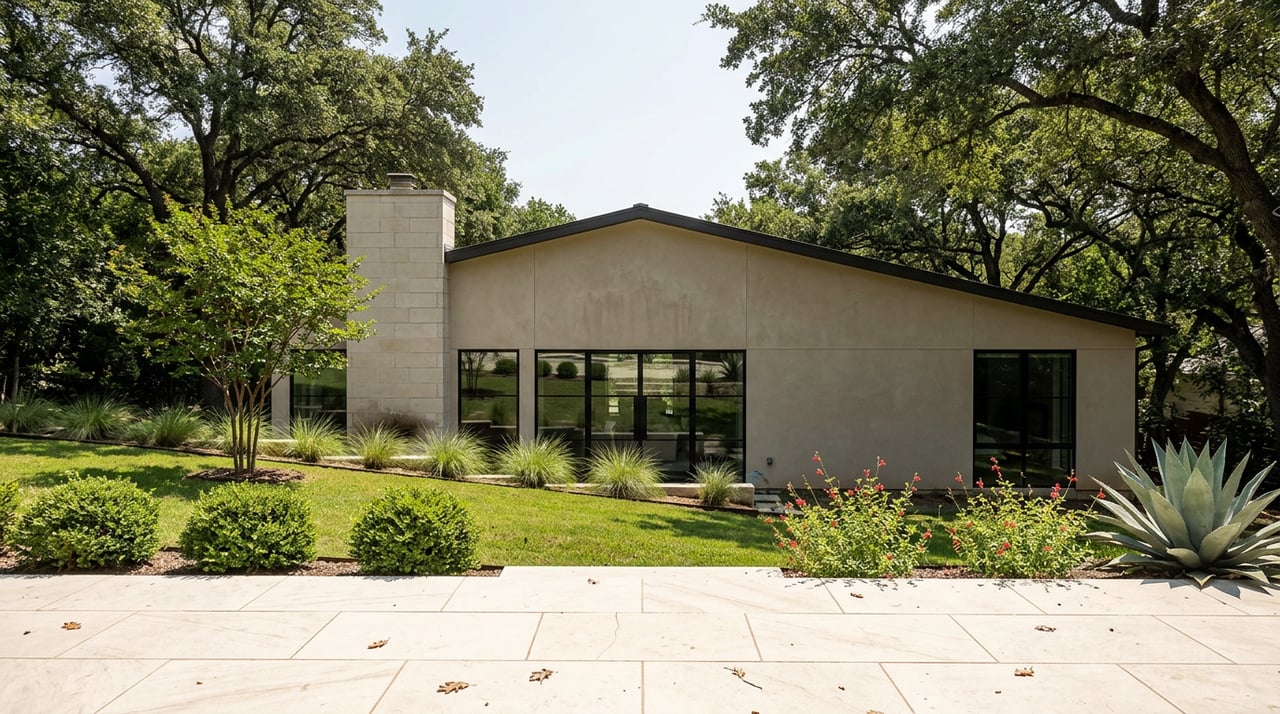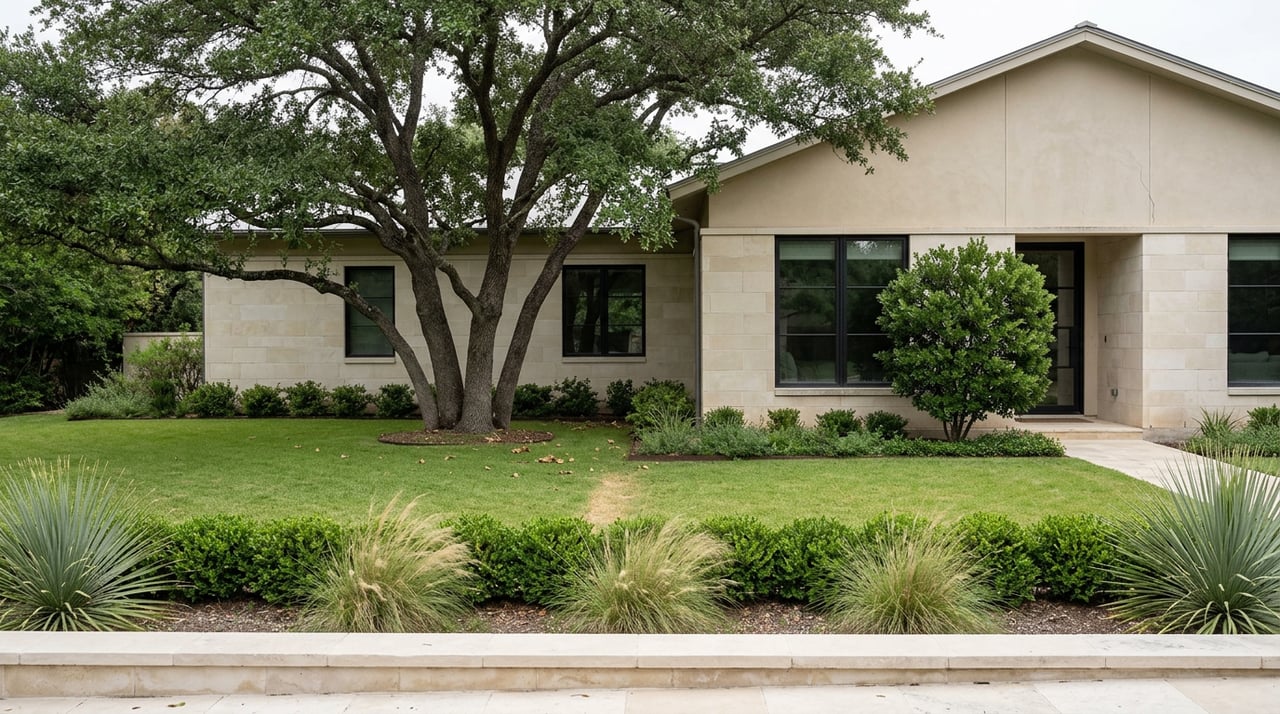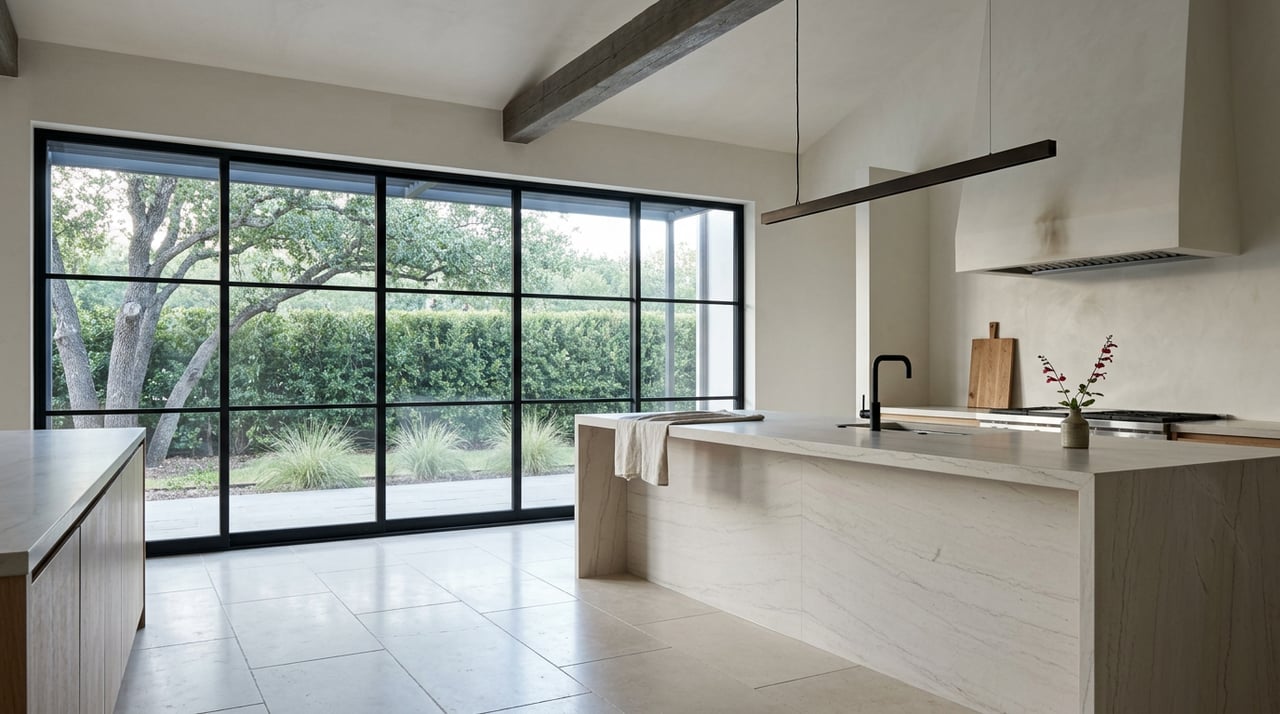
In 2019, a couple bought an acre of land inside Austin's Barton Springs Zone, took out a construction loan, and paid an architect to design their home. Only after the building permit reached city review did they learn the lot's impervious cover allowance was thousands of square feet short of what their plans required. Half the property sat inside a critical water quality zone. The only way forward was a site-specific amendment to the Save Our Springs Ordinance, the kind of request the city's own environmental staff have called rare, requiring a supermajority vote of the Austin City Council just to move a few thousand square feet of buildable surface.
That property sits within the broader Barton Springs Zone, the same regulatory zone that covers Barton Creek's golf courses, greenbelt frontage, and residential sections. Anyone comparing Barton Creek to other West Austin communities this year is going to run into a version of that couple's problem before they run into a contractor: the number on the screen is not the number that matters.
The boundary problem nobody mentions
Pull up Barton Creek's price trend on three different sites this year and you'll get three different neighborhoods.
One widely cited ZIP-code breakdown of the Austin market reported that 78735, the ZIP code that contains Barton Creek, posted the steepest year-over-year median price decline of any ZIP code in the metro for 2026, falling from roughly $1.52 million in full-year 2025 to about $1.25 million year to date, an 18.1 percent drop and the largest dollar decline in the dataset.
Around the same window, a national home-value platform reported the opposite direction entirely for "Barton Creek" specifically: in January 2026, the median sale price was $2.8 million, up 21 percent year over year, even as median price per square foot fell 29.3 percent over the same period. Days on market nearly tripled, from 43 to 115. Only two homes sold that month, down from five the year before.
Both numbers are accurate. They are not describing the same place. ZIP code 78735 straddles Austin ISD and Eanes ISD and stretches well beyond Barton Creek's gates into other southwest Austin subdivisions entirely. A ZIP-level median blends all of that together. A neighborhood-level tracker that isolates Barton Creek's actual boundary is working from a tiny, curated pool of sales, small enough that two or three transactions in a single tier can swing the median by hundreds of thousands of dollars. Neither approach is wrong. Neither is a reliable signal on its own.
Even the freshest data available runs into the same wall. A brokerage market report published this month described the $2 million and up segment of Austin's western luxury corridor, a category that groups Barton Creek in with Westlake Hills, Tarrytown, and the Lake Austin shoreline, as balanced, with a median 60 days on market and steady demand. That's a genuinely current, useful snapshot. It's also four different neighborhoods folded into one figure.
Six neighborhoods wearing one name
Part of why any single Barton Creek median is nearly meaningless is that Barton Creek isn't one market. It's a roughly 4,000-acre master-planned community built in the 1980s and 1990s around four Tom Fazio-designed golf courses, and it contains several price tiers that behave nothing alike:
- Barton Creek Villas, the entry point into the community, trading in the $1.2 million to $1.8 million range with the fastest transaction velocity of any tier
- Barton Creek Estates, the most actively traded segment, priced from roughly $1.5 million to $2.5 million and anchored heavily by families targeting Eanes ISD schools
- Sections 1 through 8, the community's established core, ranging from about $1.4 million to $2.8 million depending on lot configuration and renovation quality
- Barton Creek West, the ultra-luxury tier, running $3 million to $7 million or more, with the lowest inventory of any section and buyers who are typically long-term luxury owners seeking golf course frontage and maximum privacy
A $2.1 million property in the Estates and a $2.1 million property in Barton Creek West are not comparable purchases. Different lot sizes, different HOA structures, and in some cases different school zoning sit behind that identical number. A blended community-wide median erases all of that distinction in the interest of producing one headline figure.
The real floor under the noise
If the month-to-month median is this unreliable, what actually explains Barton Creek's long-run price resilience? The answer isn't demand psychology. It's a supply constraint written into Austin's code of ordinances more than three decades ago.
The Save Our Springs Ordinance passed in August 1992 after a citizen petition drive gathered roughly 27,000 signatures, following an all-night city council hearing where more than 800 residents showed up to fight a proposed development over the Edwards Aquifer recharge zone. The ordinance caps impervious cover, meaning rooftops, driveways, patios, and any other surface rainwater can't pass through, at 15 percent of net site area for development in the recharge zone, 20 percent for the Barton Creek portion of the contributing zone, and 25 percent for the remaining contributing zone areas. Before the ordinance, developers in the same zone could legally cover anywhere from 20 to 70 percent of a lot.
That cap doesn't move with the market. It doesn't loosen because interest rates fall or tighten because a Dallas buyer wants a bigger pool house. Under the city's land development code, variances from the Save Our Springs Ordinance are expressly prohibited. The only path around it is the same one the 2019 couple had to take: a site-specific amendment requiring a supermajority vote of the full City Council, a process city staff have described as infrequent enough to count as exceptional rather than routine.
That is the actual mechanism behind Barton Creek's price floor. New supply inside the Barton Springs Zone is capped by physics and by code, not by buyer sentiment. A monthly median can swing 20 or 30 percent in either direction because five houses sold instead of two. The impervious cover limit does not swing at all.
Institutional capital appears to be reading it the same way. Omni Barton Creek Resort & Spa, the anchor property inside the community, just added a new lodging tier: standalone Resort Homes, roughly 2,500 square feet with four and a half bathrooms, renting from $1,500 a night with bookings opening September 8, 2026. A resort operator committing capital to new construction inside a supply-capped zone is a bet on scarcity, not on next month's median.
What this means if you're comparing neighborhoods
If you're weighing Barton Creek against other West Austin communities, the headline median on any single site is close to noise. Three things matter more:
- Match tiers, not ZIP codes. Compare a Barton Creek West listing to other Barton Creek West sales, not to a ZIP-code average that includes homes outside the gates.
- Ask for the impervious cover math on any specific lot before you write an offer, not after. The allowed percentage depends on whether the parcel sits in the recharge zone or the contributing zone, and that math determines what you can actually build, add, or expand.
- Treat any single month's days-on-market or sale count as a small sample, not a trend. A community that sells two to seven homes a month will always look more volatile than it is.
A few questions worth asking directly
If Barton Creek's median price is falling, does that mean it's a good time to buy? Not necessarily, and not evenly. A ZIP-code-level decline can be driven by which tier happened to transact that quarter, not by softening demand for the tier you actually want. The relevant comparison is within your target sub-community, not across the whole 78735 footprint.
How do I find out a lot's specific impervious cover allowance before I make an offer? It depends on which zone within the Barton Springs Zone the parcel falls into, recharge zone, Barton Creek contributing zone, or broader contributing zone, since each carries a different cap. That determination should come from the city's watershed protection review, requested and verified as part of due diligence, not assumed from what's already built on the lot.
If you're trying to figure out which Barton Creek sub-community actually fits your budget and your renovation plans, that's a conversation worth having before you start comparing listings site to site. Carl Shurr works Barton Creek's sub-communities directly and can walk you through the comp set that actually applies to your target price point. Book an appointment to start with the numbers that matter for your specific lot, not the ones on the homepage.