If you live in West Lake Hills, your outdoor space can do much more than fill the lot. On a hillside property with mature trees, changing grades, and big views, the right design can make your yard feel like a true extension of the home. Whether you are planning for your own enjoyment or thinking about future resale, this guide will walk you through what matters most in West Lake Hills outdoor living design. Let’s dive in.
Why outdoor living feels different here
West Lake Hills has a distinct setting. The city sits on the west bank of Lake Austin along the eastern edge of the Balcones Escarpment, and its planning language emphasizes rugged terrain, beautiful views, dense foliage, unspoiled creeks, wildlife, and relatively low density.
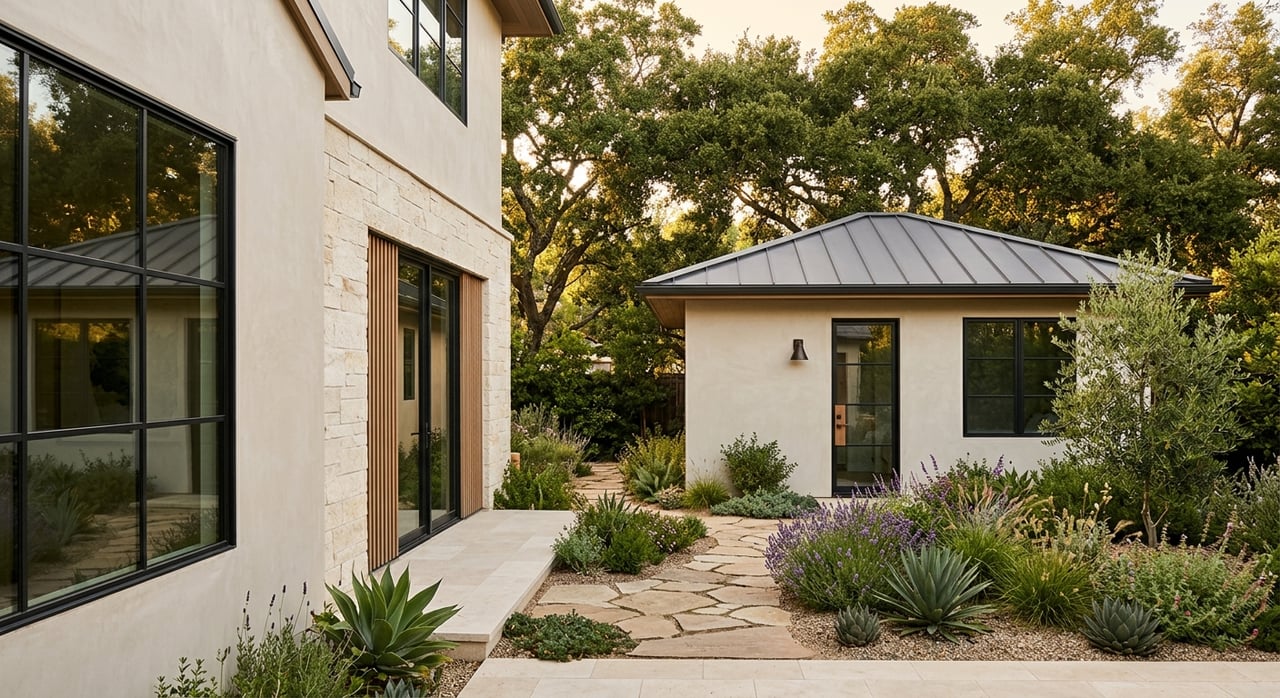
That backdrop changes the way outdoor spaces work. Instead of treating the yard as one flat area, many homes benefit from a series of outdoor rooms that respond to slope, preserve privacy, and highlight the landscape.
Start with the land, not the furniture
In West Lake Hills, the lot usually sets the design direction. Sloped terrain, tree canopy, setbacks, and drainage constraints often have a bigger impact on the final plan than your material palette or seating layout.
That is why the best projects often begin with a site plan. On hillside lots especially, it is smart to think about where terraces, decks, stairs, drainage paths, and view corridors belong before choosing finishes.
Design in layers
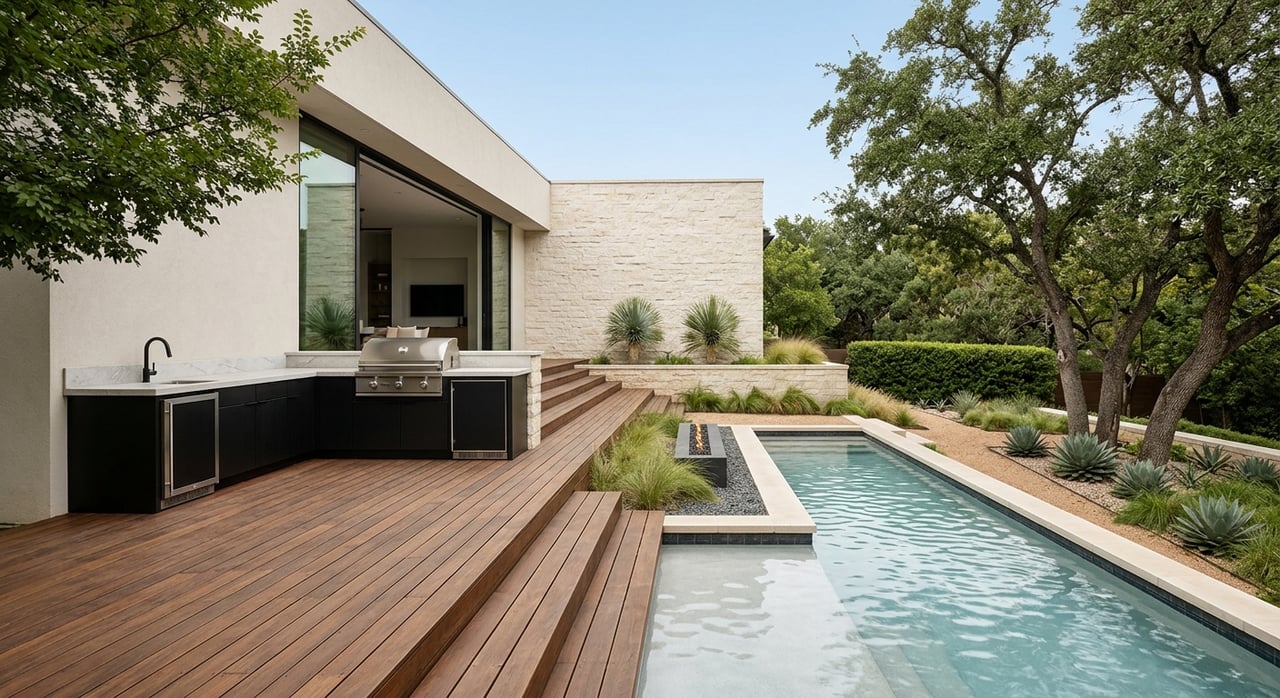
A layered plan often works better than one oversized patio. Elevated decks, terraces, balconies, and stepped planting areas can help the space feel more natural and more usable.
This approach can also preserve sightlines. Rather than blocking the view with a large flat structure, you can create multiple vantage points that feel connected to both the home and the topography.
Respect the tree canopy
Privacy in West Lake Hills often comes from existing vegetation. The city places importance on preserving its scenic wooded character, and vegetation removal is regulated.
That means your design should usually work with the canopy instead of against it. Layered landscaping, selective screening, and carefully framed view corridors often create a better result than trying to clear too much.
Plan for heat, shade, and storms
Austin’s climate matters here. The National Weather Service describes long, hot summers, mild winters, and about 35.5 inches of annual rainfall, with thunderstorms that can bring heavy rain and flash-flood conditions.
For outdoor living, that means comfort and durability should sit right alongside appearance. A beautiful space that feels too hot in August or struggles in a storm will not function the way you want.
Make shade part of the design
Covered patios, pergolas, and other shaded living areas can make a major difference in day-to-day use. If you want the space to feel inviting through much of the year, shade should be part of the first design conversation, not an add-on.
Shade structures can also help define separate outdoor zones. A covered dining area, an open lounge deck, and a partially screened sitting area can make the yard feel larger and more intentional.
Take drainage seriously
On sloped lots, water management is not optional. West Lake Hills reviews drainage plans with building permit applications, and all construction projects are subject to stormwater management.
In practical terms, your outdoor project needs to move water safely and predictably. Drainage should be considered before hardscape placement, pool design, retaining elements, or planting plans are finalized.
Balance views and privacy
Many West Lake Hills properties are view-driven. Recent local listings frequently highlight multiple terraces, balconies, and open-air decks, which shows how much buyers value outdoor areas that connect to the setting.
At the same time, privacy matters. The strongest outdoor spaces usually balance open views with a sense of retreat, using landscaping and layout to create separation without closing everything off.
Use low-profile elements
If your lot has skyline or hill-country views, low-profile design choices can help keep them open. Railings, planting height, and the placement of covered structures all affect what you see from the house and from the outdoor areas themselves.
A good plan treats each seating area as its own vantage point. That can create a more memorable experience than placing every function into one broad hardscaped zone.
Know the rules before you build
Outdoor projects in West Lake Hills are regulated site development. The city states that the residential building permit application covers pools, landscaping, and changes or additions to impervious cover, and a swimming pool also requires its own separate permit.
Other improvements may require permits too. New fences require permits, and roofing work does as well.
Impervious cover is a major factor
Impervious cover can shape almost every outdoor decision. According to the city FAQ, single-family residential properties that are 0.5 acre or larger have a maximum of 25% impervious cover, while some smaller properties on central wastewater may have an impervious-cover bonus.
This matters because many common outdoor materials count toward that limit. The city states that concrete, asphalt, pavers, swimming pools, crushed gravel and granite, and decking materials all count as impervious cover.
Setbacks can limit placement
Setbacks are just as important as coverage limits. The city says setbacks vary by lot size and zoning district, and no site disturbance is allowed in setbacks.
The city also flags items such as retaining walls, patios, fountains, A/C pads, pool equipment, pergolas, and arbors as elements that cannot be placed in setbacks without approval. On many lots, this is why layout planning needs to come first.
Tree rules affect timing and layout
Tree and vegetation rules can influence both design and schedule. West Lake Hills says vegetation removal generally requires a permit, and a current certified tree survey is required as part of the process.
The city also states that no site clearing or tree removal may begin until tree and building permits are issued, and trees 14 inches or larger require a City Council variance. If mature trees are part of your lot, they should be treated as a key design condition from day one.
Expect permitting to take time
Larger outdoor projects in West Lake Hills are not overnight approvals. The city notes that the first round of comments typically takes three to four weeks after a complete submission, while larger projects can take months to permit.
If a variance is required, the timeline can stretch by two to three months or more. For that reason, early planning is not just helpful. It is part of a realistic project strategy.
Firewise design should be built in
West Lake Hills participates in Firewise and asks homeowners to think about wildfire prevention outward from the structure, especially within the first five feet. That has real implications for landscaping and hardscape decisions.
If you are considering planting, surface materials, or fire features, safety should be part of the initial design brief. Plant spacing, cleanup, and the materials closest to the home all deserve careful thought.
Features buyers notice in West Lake Hills
Recent local listings suggest that buyers in West Lake Hills respond to outdoor spaces that feel complete and integrated with the home. Covered living and dining areas, pools and spas, outdoor kitchens, fireplaces, decks, terraces, and curated landscaping show up repeatedly in listing descriptions.
The common thread is not just luxury. It is usability. Buyers appear to value outdoor spaces that feel finished, intentional, and ready for everyday living.
Focus on livability first
National remodeling research points in a similar direction. NAR reporting shows strong estimated cost recovery for projects like landscape maintenance, patios, and wood decks, while homeowners consistently say they value improved functionality, livability, durability, and aesthetics after remodeling.
In a market like West Lake Hills, that often means the most appealing outdoor updates are the ones that feel low-maintenance, durable, and closely tied to the architecture and site.
Smart priorities for your project
If you are deciding where to invest, these priorities usually make the most sense in West Lake Hills:
- Site-responsive layout that steps with the land
- Shade structures that improve comfort in hot weather
- Drainage planning that supports long-term performance
- View preservation through careful placement and low-profile elements
- Privacy screening that works with existing trees and landscaping
- Permit-aware design that accounts for setbacks, tree rules, and impervious cover
- Firewise thinking near the home and outdoor gathering areas
- Durable finishes that can handle heat, rain, and everyday use
Why this matters for resale
Outdoor living is often a meaningful part of the value story in West Lake Hills. In a market where setting, architecture, and lifestyle all matter, a well-designed exterior can reinforce how a property feels and how it is perceived.
The strongest projects usually do not look added on. They feel like they belong to the house, the lot, and the landscape. That kind of cohesion can matter when it is time to market the home.
If you are considering buying, selling, or improving a property in West Lake Hills, thoughtful outdoor design can influence both daily enjoyment and long-term positioning. For tailored guidance on how outdoor living features may fit your home, lot, and resale strategy, book an appointment with Carl Shurr.
FAQs
What makes outdoor living design different in West Lake Hills?
- West Lake Hills has rugged terrain, mature tree canopy, and many view-oriented lots, so outdoor spaces often work best as layered terraces, decks, and patios that respond to the land rather than one large flat yard.
What permits are needed for outdoor projects in West Lake Hills?
- The city states that residential building permit applications cover pools, landscaping, and changes or additions to impervious cover, and a swimming pool also requires its own separate permit. New fences require permits as well.
What counts as impervious cover in West Lake Hills?
- According to the city, concrete, asphalt, pavers, swimming pools, crushed gravel and granite, and decking materials count as impervious cover, which can affect how much outdoor construction is allowed on your lot.
Why is drainage important for West Lake Hills outdoor spaces?
- The area’s sloped lots and heavy storm potential make drainage a major design issue, and the city reviews drainage plans with permit submissions for construction projects.
How do tree rules affect landscaping in West Lake Hills?
- Vegetation removal generally requires a permit, a current certified tree survey is required, and trees 14 inches or larger require a City Council variance, so mature trees can strongly shape project layout and timing.
What outdoor features do buyers often notice in West Lake Hills homes?
- Recent local listings often highlight covered patios, terraces, decks, pools, spas, outdoor kitchens, fireplaces, and curated landscaping, especially when those features feel integrated with the home and site.