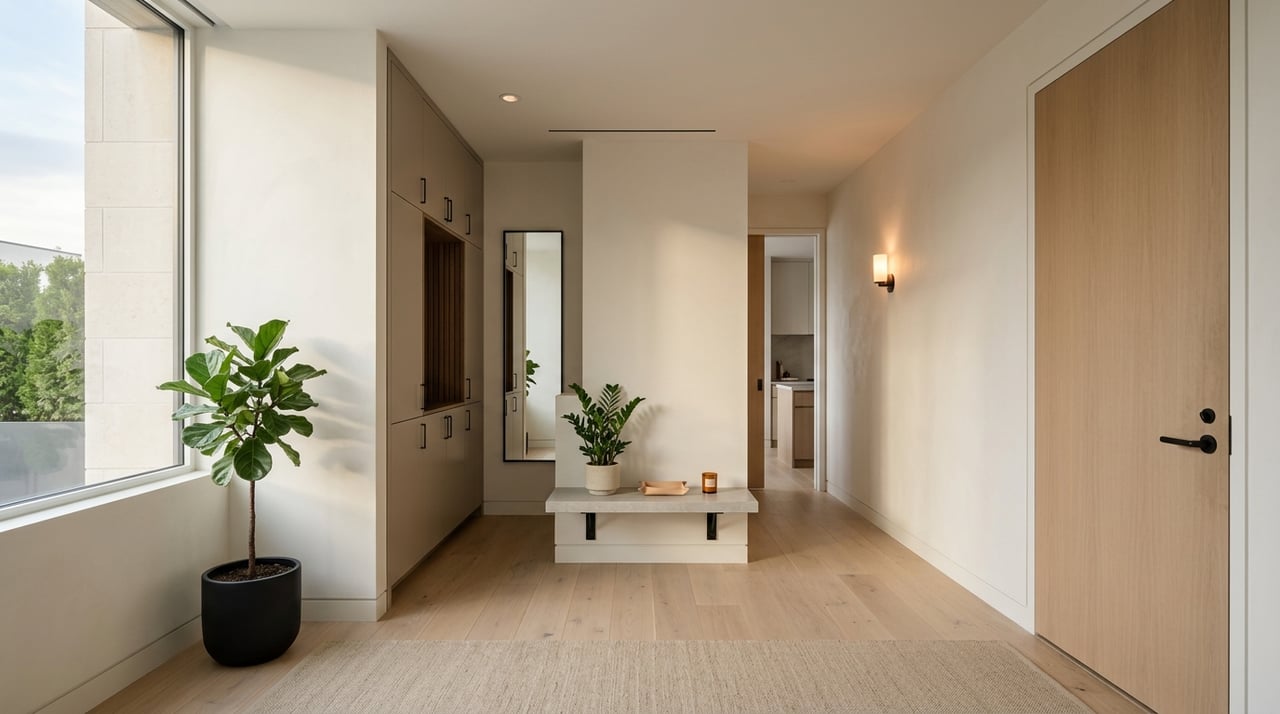
Wondering whether a downtown Austin pied-à-terre is a smart move or just a stylish idea? If you want a low-maintenance home base in the middle of the city, the answer may be yes, but only if the lifestyle truly matches how you live. Downtown Austin offers walkability, vertical living, and strong convenience, and this guide will help you weigh the benefits, trade-offs, and market context before you decide. Let’s dive in.
Why Downtown Austin Fits This Home Type
Downtown Austin works well for pied-à-terre living because it functions as a dense, active urban core rather than a quiet, low-rise residential area. According to the Downtown Austin Alliance Vitality Index, downtown supports roughly 133,000 employees and saw average daily pedestrian counts of 161,379 in Q1 2026, including out-of-market visitors, commuters, and residents.
That matters if you want a home that keeps you close to work, dining, entertainment, and daily conveniences. A pied-à-terre usually works best when you plan to use it as a weekday residence, a frequent-travel home base, or a secondary city home with easy access to the core.
The built environment also supports that lifestyle. The City of Austin says the Downtown Density Bonus Program was designed to promote a vibrant, dense, pedestrian-friendly downtown, which helps explain why newer residential options often feel more vertical, mixed-use, and street-oriented than homes in other parts of the city.
What a Downtown Pied-à-Terre Usually Looks Like
In downtown Austin, this type of home is most often a condo in a residential tower. That product type lines up with what many second-home buyers, hybrid professionals, and frequent travelers want: lock-and-leave convenience, shared amenities, and a central address.
The current pipeline reinforces that trend. The 2025 State of Downtown reports that downtown had 13 projects under construction at the end of Q1 2025 totaling 6.6 million square feet, and residential projects under construction are expected to add more than 2,600 units.
For buyers, that can mean more options to compare. The same report notes that condo units averaged 123 days on market in 2024, which it describes as a shift toward a buyer’s market. In plain terms, you may have more room to compare buildings, unit layouts, and pricing than you would in a tighter market.
Common Features You Can Expect
Many downtown towers are designed around convenience and amenities rather than large private lots or sprawling interiors. Depending on the building, that can include concierge services, fitness areas, guest accommodations, owner lounges, pet amenities, and pool decks.
For example, The Independent highlights amenities such as guest suites, concierge service, a heated pool, business center, and fitness and yoga spaces. 5th & West markets features like concierge services, a guest suite, pool, fitness studio, yoga studio, dog park, and pet spa.
These examples help show the general product profile downtown buyers often encounter. If you are considering a pied-à-terre, the bigger question is not just square footage. It is whether the building’s services and common spaces support how you plan to use the home.
How Buyers Typically Use These Homes
A downtown pied-à-terre tends to work best when you value access and efficiency more than extra space. You might use it as a primary downtown residence, a workweek base for a hybrid schedule, or a second home that lets you spend more time in Austin without the upkeep of a larger property.
Downtown’s live-work-play setup supports that kind of ownership. The Ann and Roy Butler Hike-and-Bike Trail offers a 10-mile urban path with more than 2.6 million visits a year, and it serves not only as a recreation asset but also as an alternative transportation route for the urban core.
The district is also active well beyond business hours. The State of Downtown 2025 reports 40.2 million out-of-market visitors downtown in 2024, while Republic Square hosted more than 90,000 event attendees that year. For some buyers, that level of energy is a major advantage. For others, it may feel busier than they want.
Lifestyle Questions to Ask Yourself
Before you buy, it helps to get specific about how you would actually use the property. A downtown Austin pied-à-terre can be an excellent fit, but only when your habits line up with the setting.
Ask yourself:
- Do you want a low-maintenance home with shared amenities?
- Will you use the property often enough to benefit from a central location?
- Do you enjoy a lively, walkable environment?
- Are you comfortable with condo living and building rules?
- Would you rather trade square footage for convenience?
- Do you want to be close to trails, dining, and public events?
If you answer yes to most of those questions, downtown may be worth serious consideration. If you want privacy, a slower pace, or more separation from city activity, another Austin neighborhood may be a better fit.
Downtown Trade-Offs to Consider
Every real estate decision comes with compromises, and pied-à-terre living is no different. The main upside is convenience. The main trade-offs are usually smaller interior space, shared walls and common areas, and a more active urban environment.
Downtown Austin is also still growing. The State of Downtown 2025 describes the development pipeline as smaller but sustainable, with more than 2,600 residential units under construction. More supply can create more choice, but it can also mean ongoing development activity around the core.
Infrastructure is another important factor right now. The City of Austin notes that TxDOT’s I-35 Capital Express Central project broke ground in 2024, with major downtown highway work scheduled to begin in 2027 and impacts expected through 2033 for Lady Bird Lake access, parts of the Butler Trail, and several parks.
That does not automatically rule downtown out. It simply means you should evaluate not just the unit and building, but also the near-term experience of living there.
Why Walkability Matters Here
One of the biggest reasons buyers choose a downtown pied-à-terre is walkability. In a neighborhood built around density and mixed-use development, you can often accomplish more without relying on a car for every errand or outing.
The 2nd Street District is a strong example of that planning approach. The City describes it as a dense, walkable urban experience that, by 2017, included more than 600 residences, 3,000 jobs, and 175,000 square feet of retail space.
If your goal is to simplify your routine, that kind of environment can be a real advantage. You may find that a smaller home feels more useful when so much of your lifestyle happens just outside your front door.
Is It a Smart Buy Right Now?
For many buyers, the timing is worth a close look. With condo units averaging 123 days on market in 2024 according to the Downtown Austin Alliance annual report, you may have more opportunity to compare inventory and negotiate than in a faster-moving seller’s market.
That does not mean every unit is a deal or that every tower offers the same long-term value. Building quality, HOA structure, amenities, floor plan efficiency, views, location within downtown, and future surroundings all matter.
This is where a more analytical buying process helps. A pied-à-terre purchase is often less about buying the biggest space and more about buying the right combination of location, building quality, ease of ownership, and future usefulness.
Who This Home Type Fits Best
A downtown Austin pied-à-terre may be a strong fit if you are:
- A frequent traveler who wants a lock-and-leave home base
- A relocating buyer who wants immediate access to the urban core
- A hybrid professional who needs a workweek residence
- A second-home buyer who values convenience over size
- Someone who enjoys a walkable, active city setting
It may be a weaker fit if you want a quiet retreat, a large yard, or a car-dependent routine. Neither approach is better. The key is choosing the environment that supports your actual lifestyle rather than an idealized one.
If you are weighing a downtown Austin pied-à-terre, the smartest next step is to compare buildings, ownership costs, and location trade-offs with a clear strategy. Carl Shurr offers high-touch, data-driven guidance for buyers who want a thoughtful view of downtown options, from lifestyle fit to negotiation and long-term value.
FAQs
Is a downtown Austin pied-à-terre usually a condo?
- Yes. In downtown Austin, this type of home is most commonly a condo in a residential tower with shared amenities and lock-and-leave convenience.
Is downtown Austin a good fit for a second home?
- It can be, especially if you want a walkable home base near dining, recreation, and daily conveniences rather than a larger, more secluded property.
Are downtown Austin condos more negotiable right now?
- The Downtown Austin Alliance reported condo units averaged 123 days on market in 2024, which it described as a shift toward a buyer’s market, suggesting more room for comparison-shopping.
What are the biggest trade-offs of downtown Austin pied-à-terre living?
- The main trade-offs are usually smaller interior space, shared-amenity building living, and a busier urban setting.
Will construction affect downtown Austin living in the next few years?
- Yes. The City of Austin says the I-35 Capital Express Central project is expected to affect Lady Bird Lake access, parts of the Butler Trail, and several parks during the multi-year construction period.
Who should consider buying a pied-à-terre in downtown Austin?
- Buyers who value low-maintenance ownership, a central location, walkability, and easy access to the city’s core often find this home type appealing.