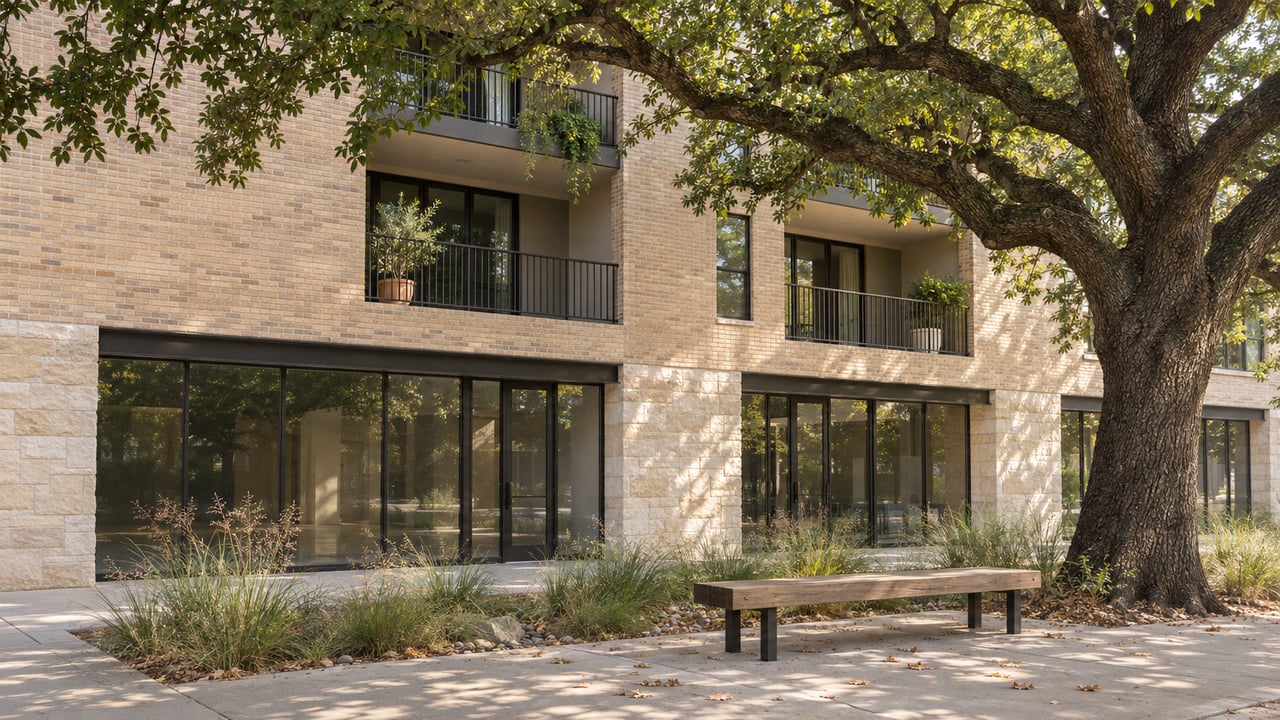
Near the H-E-B at South Congress Avenue and Oltorf Street, the Twin Oaks Shopping Center had seen little activity for years. In August 2026, SomeraRoad announced it would turn the center into a "pedestrian-oriented, open-air lifestyle center" with 90,000 square feet of retail, dining and other space, according to the Austin American-Statesman. The same report said county records put the property's value at $16 million four years earlier and more than $27 million in 2026.
That corner is also where Austin Light Rail Phase 1 is planned to end its South Congress branch. Trains are targeted for 2033. Money is already moving at the Oltorf end. For anyone weighing a house in Bouldin Creek, which block they buy on matters more right now than the opening date.
Where the line meets Bouldin Creek
In January 2026 the Federal Transit Administration signed the Record of Decision for Phase 1. It covers a 9.8-mile line with 15 stations and a new light rail bridge across Lady Bird Lake. South of the lake, the line splits: one branch heads south on South Congress to Oltorf Street, and the other heads east along East Riverside Drive. The line turns south from 3rd Street onto Trinity Street and crosses the lake on the new bridge. The bridge has its own bike and pedestrian lanes, which connect to the Ann and Roy Butler Hike-and-Bike Trail at Waller Beach in Town Lake Metro Park.
The southbound branch crosses East Bouldin Creek on an elevated center-running guideway, comes down to street level on South Congress and stays at grade to its last stop. The Final Environmental Impact Statement places three stations on that branch, from north to south:
- Waterfront Station, an elevated center-platform stop on East Riverside Drive at the Barton Springs Road extension.
- South Congress Station, a center-platform stop on South Congress between Academy Drive and James Street, reached by crosswalks at the nearby intersections.
- Oltorf Station, a center-platform stop on South Congress between Oltorf Street and Long Bow Lane. A surface park-and-ride lot on Long Bow Lane, east of Congress and one block south of Oltorf, would have about 100 leased spaces on roughly 2 acres where a parking facility already operates.
The earlier plan had a fourth stop on that side of the river. The selected design eliminated the Travis Heights Station, so the South Congress and Oltorf stations are the only two along the stretch of Congress that separates Bouldin Creek from Travis Heights.
The plan also shapes the street itself. The preferred design keeps two general-purpose traffic lanes in each direction on South Congress, with left turns at select locations inside the South Congress Business District. ATP and the City say they will keep studying how lanes, parking, bike and pedestrian space and curbside amenities are arranged, without changing the right-of-way footprint. For a Bouldin Creek household whose daily route crosses Congress toward the east side, where those left turns end up matters more than any station rendering.
The Oltorf end is changing first
Twin Oaks is not the first redevelopment plan for that corner. In 2023, Trammell Crow Company was leading a redevelopment, and the Statesman reported that the firm "abandoned its pursuit" of the project afterward. SomeraRoad then announced its own plans, with RUE handling leasing. RUE's founder Jeremy Zidell told the paper that "opportunities to establish a meaningful presence here have been incredibly limited." So the Congress and Oltorf node has drawn a second developer and a leasing firm that works with national retail brands, while the rail line it sits on has no construction date beyond a target year.
The City is building at the same end of the corridor. In 2025 the Austin Housing Finance Corporation bought 1.5 acres on South Congress. The site, at 2908 South Congress, cost $10.3 million, paid for with affordable-housing bond money and Project Connect funds. The corporation still owns the land and is looking for a development partner. KUT described the site as about half a mile from the planned Oltorf station. The current concept is 90 to 150 rental units, at least 90 percent of them income-restricted, in four- to five-story buildings. Final design and unit count are still open. The project page targets a developer solicitation in January 2027, an award between May and July 2027, construction in 2029 and completion in 2031.
The 2031 completion target for 2908 South Congress comes two years before the 2033 rail target, and the Twin Oaks plans were announced with no construction date yet set for the line beside them. At the south end of the corridor, both projects are moving on their own timelines, ahead of the train.
City policy has also been moving, though not station by station. The City adopted its first Equitable Transit-Oriented Development overlay on May 16, 2024, and later said the first round of rezoning covered about 850 acres. A citywide density bonus program followed in May 2026. The station-area plan Council adopted on South Congress in May 2025 covers the existing CapMetro South Congress Transit Center bus hub, not the new SoCo or Oltorf rail stops. The City's July 2026 implementation memo lists station-area planning for more transit corridors as future work. For now, change at the two Congress stations is coming from private and City-owned land, without a dedicated neighborhood plan.
The schedule for the rest of the corridor
Everything north of Oltorf depends on the rail project's own timeline, and that timeline still has open questions. Here is where Phase 1 stands in late November 2026:
- January 16, 2026: the final environmental review and Record of Decision were published, which cleared the way for contractor design and preconstruction.
- February 18, 2026: ATP awarded the design-build contract to Austin Rail Constructors, which started design work and field investigations.
- April 2026: ATP reported work on identifying and relocating utility conflicts, and the City was updating its permitting and streetscape standards.
- May 2026: KXAN reported that preliminary work had begun and the ATP board had authorized buying 18 parcels.
- October 27, 2026: the Federal Transit Administration's Capital Investment Grants project list still showed Austin in New Starts Project Development.
- 2027 and 2033: the published targets for the start of major construction and for opening.
Two outside factors sit on top of that schedule. The first is federal money. Austin Current reported on November 13 that ATP has not yet received the federal funding meant to cover about half of the project's total cost and is still in talks with federal officials. In July, KUT reported that ATP did not expect a funding decision until after construction begins.
The second is the lawsuit over how the project is financed. Austin Current reported that the case remains unresolved after an August hearing led to appeals from both the Attorney General's office and the City and ATP. The paper also reported that the lawsuit has not caused delays so far, but the open legal questions could keep ATP from issuing the bonds that pay for construction. An ATP spokesperson told Austin Current that the agency "remains confident and ready for our day in court." In the same report, Mayor Kirk Watson pointed to a possible way to restore the airport connection without more taxpayer money.
Neither the federal grant nor the lawsuit applies to Twin Oaks or to 2908 South Congress. Both projects have their own owners and their own schedules. That gap between the two sets of dates is the main difference between the north and south ends of Bouldin Creek's Congress edge.
Reading a Bouldin Creek address against the line
The line touches the neighborhood in three ways, and each depends on a different decision-maker.
Near the river, the line is elevated. It crosses East Bouldin Creek and stops at Waterfront Station on East Riverside. What happens near the river depends on ATP's design work and on the bridge.
Along South Congress, the line runs at street level in the middle of the avenue. The SoCo Station between Academy Drive and James Street sits in the busiest commercial part of the corridor. That segment depends on the 2027 construction start and on how the lane study shapes left turns. Spring 2024 survey maps from ATP, reported by KUT in February 2025, listed several properties along South Congress and near Oltorf as possible displacements. Those were possibilities from that survey, not confirmed acquisitions. A buyer looking at a house near the avenue should ask what has been built or decided on the nearby commercial lots since then.
At the south end, the Oltorf terminus, the Long Bow Lane park-and-ride, Twin Oaks and 2908 South Congress are close together. That node depends on private capital and a City land purchase as well as the rail project, and the first two of those have already acted.
Buyers comparing the two sides of Congress will find the stations shared. Both the SoCo and Oltorf stations sit on the avenue that divides the neighborhoods, and with the Travis Heights Station gone, neither side has a stop of its own. Our Bouldin Creek and Travis Heights comparison covers the other differences between them. For owners thinking about a sale before construction starts, our notes on preparing a Bouldin Creek home for market apply to any block along the corridor.
If you're weighing a Bouldin Creek address against the stations, the Twin Oaks redevelopment and the 2027 construction start, I can go through how it sits relative to each of them. Book an appointment with Carl Shurr and bring the address you're considering.